
Where It All Began
While I had tried many different sports during middle and high school, the passion that caught me off guard in college was my love for Formula 1. Before university, cars to me were nothing more than a means of transportation—a way to get to school, or something my parents drove. That all changed in my first year at UNC.
I had just arrived in the United States for college, and that same year, I had recently earned my driver’s license both in China and in the U.S. For the first time, I understood the thrill, the freedom, and the responsibility behind the wheel. The sensation of speed, even at just 50 mph, made me realize what cars could mean beyond practicality. Driving gave me a glimpse into a whole new world of adrenaline.
But the real turning point wasn’t my own driving—it was Formula 1.
The Rise of Zhou Guanyu
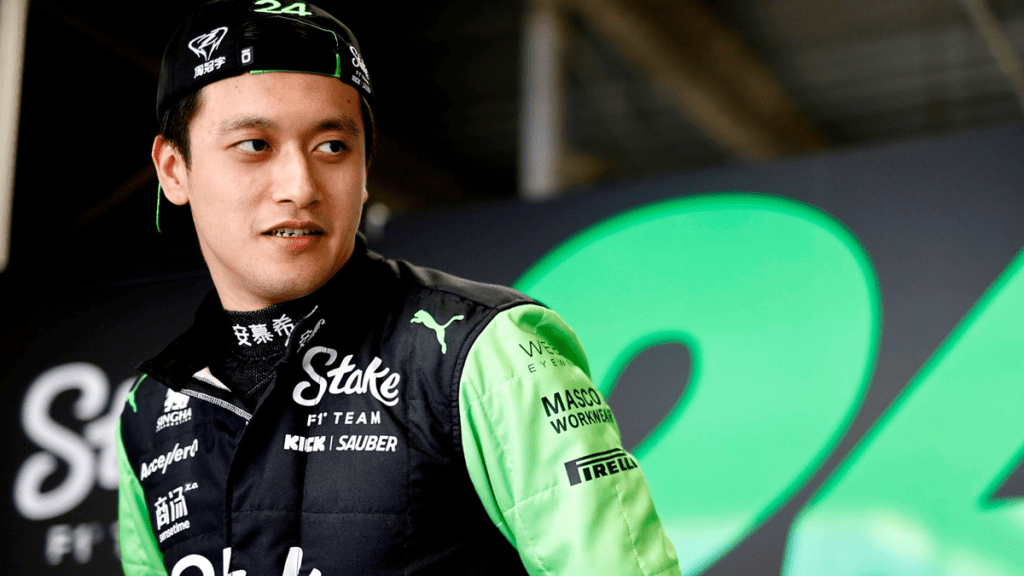
In 2022, something historic happened: Zhou Guanyu became the first Chinese driver in Formula 1 history. At the time, I didn’t fully grasp the significance of this moment. I remember seeing Chinese social media light up with celebrations, and some of my friends buzzing with excitement, but I wasn’t yet a part of that world.
It wasn’t until I began watching races with friends in college that I started understanding the strategies, the rivalries, the pressure, and the brilliance of motorsport. Unfortunately, I missed Zhou’s spectacular debut when he scored points in his first-ever race. Still, that moment ignited something for many Chinese fans—a long-awaited dream finally becoming reality.
Chasing the Grid from Afar
As I transitioned into my sophomore year, the 2023–24 F1 season brought China back into the race calendar with the return of the Shanghai Grand Prix. Sadly, studying abroad meant I couldn’t attend the race in person, even though it took place in March, right around my spring break.
Friends invited me to join them at the Miami and Austin races in the U.S., but conflicting schedules got in the way. I remember feeling deep regret after saying no—it could’ve been my first live Grand Prix experience.
Ironically, that same season was also when Zhou’s team, Alfa Romeo, was rebranded into Sauber. The team’s performance dropped dramatically, and Zhou spent most of the season at the back of the pack. While most fans followed Red Bull’s dominance and the championship battle, I found myself rooting for the underdog. Week after week, I watched every qualifying, every race, every post-race interview—hoping to see Zhou shine.
The Loudest Cheer in Qatar
There’s something poetic about cheering for someone who has everything stacked against them. I’ll never forget the Qatar Grand Prix that year. Zhou, against all odds, finished in the points. When he crossed the finish line, I erupted into a scream so loud that my roommate thought something terrible had happened.
For fans like me, watching Zhou score—even if it was just a couple of points—meant everything. It wasn’t about winning championships. It was about proving that a Chinese driver could stand tall on the most elite racing grid in the world. And even though Zhou didn’t secure a race seat for the 2024–25 season, I believe he’s already made history.
Racing and Me Today
Formula 1 is now a part of my routine, my identity, and my connection to both home and the global world. I watch race highlights while eating lunch, follow team strategies with genuine interest, and check qualifying times before going to bed on Saturdays.
What I’ve come to love most about F1 is its combination of technology, human grit, and the stories behind the drivers. It’s not just speed. It’s engineering, teamwork, psychology, and drama—all on a global stage. Watching Zhou face ups and downs reminded me that success isn’t always about being the fastest. Sometimes, it’s about showing up, pushing through failure, and never giving up.
Sim Racing and Karting: Driving My Own Path

Beyond being a fan, I also began developing a more hands-on relationship with racing. Every semester, I try to make several trips to a karting track in Charlotte—one of the best in North Carolina. Each time I visit, I time myself, study the layout, and aim to beat my personal best. There’s something addictive about shaving off half a second from your lap time, the immediate feedback of your skills in real-time. The rush of acceleration, the mental focus in turns, and the split-second decisions—it’s as close to real racing as most of us can get.
Though there are some karting facilities in the RTP area too, none match the scale and challenge of Charlotte’s. Still, they’ve given me the opportunity to practice frequently and stay connected with racing physically, not just as a spectator.
I’ve also spent countless hours using a friend’s high-end F1 simulator setup. With force feedback steering, pedal boxes, and VR support, it feels incredibly immersive. I run simulations of real-world circuits—from Suzuka to Silverstone—and each corner teaches me something: late braking, throttle modulation, perfecting racing lines. The simulator helps me internalize the demands of a race, and gives me a visceral appreciation for just how hard it is to push an F1 car to its limit.
Sometimes, even while driving on the road, I find myself analyzing corners and mentally tracing racing lines. Of course, I always prioritize safety—I’m never reckless—but it shows how deeply this way of thinking has become a part of how I see the road.
How to Build an F1 Driver: The Harsh Reality
Curious about what it takes to become an F1 driver, I asked ChatGPT to break it down for me. The answer was sobering: it takes not only immense talent and dedication, but also a staggering amount of money.
Most professional F1 drivers start karting by the age of 6 or 7. A year of competitive karting at a serious level can cost between $50,000 to $100,000 USD. From there, the path continues through junior formulas like Formula 4 and Formula 3, where costs skyrocket—up to $750,000 per season in F3 and over $2 million per season in Formula 2.
Take Lando Norris, for example—his father is a millionaire and helped finance his junior career. Zhou Guanyu also came from a family able to support his training in Europe from a young age. Talent is essential, but without financial backing, even the most gifted drivers may never make it past karting.
That’s what makes Zhou’s journey so meaningful for Chinese fans—he represents the realization of a dream few dare to chase. Seeing him in F1 shows that with the right mix of skill, opportunity, and support, anything is possible.
Across the Ocean: Racing Culture in the U.S. vs China
In the U.S., racing culture feels different. NASCAR dominates the conversation here, and while F1 is growing in popularity (especially with shows like Drive to Survive), it still feels niche compared to its fanbase in China. In China, Zhou’s debut sparked a wave of interest, with more youth joining karting leagues and watching races on weekends.
I see more Chinese fans rallying together online—an entire generation awakened by one driver. Even though we’re thousands of miles apart, we feel united in our hope: that Zhou will return, stronger than ever. The 2025 season may feature 11 teams instead of 10, and I’m holding onto the dream that we’ll see him back on the grid.
Until then, I’ll keep watching. I’ll keep learning. I’ll keep cheering—for the sport, for the speed, and for the ones who dare to race when no one expects them to win.
 Snow Liu's Web
Leave a comment