Blog 2: Orienteering – Finding My Way in Every Sense

Where It All Began
Orienteering, born in the late 19th century in Sweden, began as a military exercise designed to sharpen navigation and map-reading skills. Over time, it evolved into a global sport, now practiced competitively in over 70 countries under the International Orienteering Federation (IOF), established in 1961. In China, orienteering gained popularity in the 1980s, particularly in cities like Beijing, where lush urban parks offered perfect venues for beginners and enthusiasts alike.
My personal journey with orienteering started in the third or fourth grade, thanks to a recommendation from my elementary school PE teacher. The idea of navigating through a park with just a map and a compass felt thrilling. My first event took place at Xishan Park, merely ten minutes away from my home—a place so familiar that it felt almost like my backyard.
Learning the Language of the Map
Unlike many first-timers who hesitated over their maps, I immediately recognized key features: the lakes, pavilions, and clustered woods I had explored countless times before. After confirming my starting point and a few control markers, I set off at a light jog. Alone but confident, I navigated shaded trails and winding stone paths, feeling an unexpected ease.
The physical sensations remain vivid even today—the crunch of gravel underfoot, the filtered sunlight breaking through leaves, the sudden flashes of orange-and-white control flags between the trees. To my surprise, I finished among the top ten in my group during my very first competition. It was a small achievement, but for a newcomer, it felt enormous and encouraging.
Opening My Eyes: From Parks to Dreams of Forests
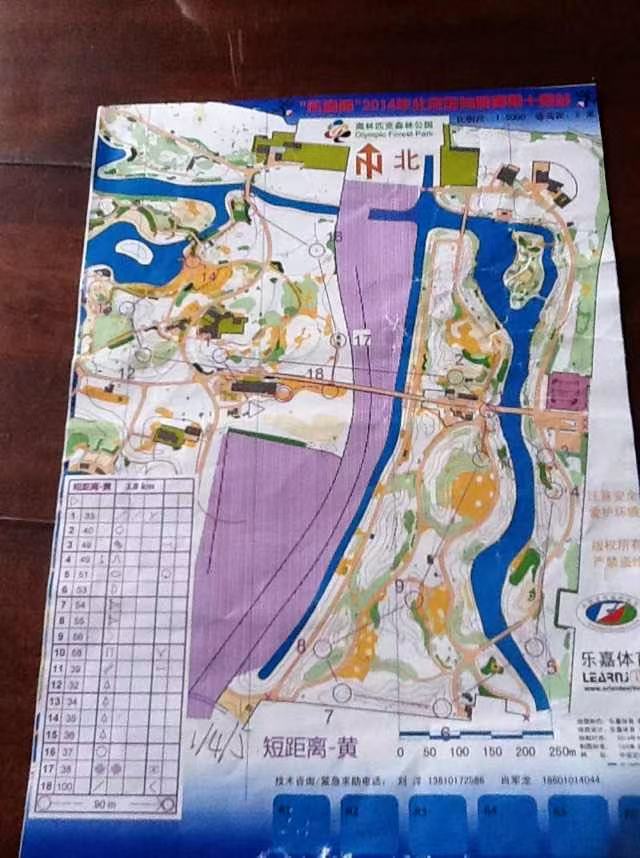
Buoyed by early success, I joined the school orienteering team alongside my friend Huang. Training filled our weekends: sprinting across known parks like Yuanmingyuan, and cautiously decoding unfamiliar terrains like the Olympic Forest Park.
Gradually, I transitioned from short, 20–30 minute courses to longer endurance events lasting over an hour. For a fourth or fifth grader, running, thinking, and constantly adjusting strategies for over an hour was both physically and mentally exhausting—but also exhilarating. Each race was a moving puzzle, an adventure that sharpened not just my legs but my mind.
Participation fees were reasonable, about 100 RMB (≈$15) per event, often with a chilled bottle of Pocari Sweat handed out at the finish line. Those little blue bottles remain a powerful symbol of accomplishment to me even today.
Beyond Beijing’s urban parks, I learned through Huang’s experience at a Swedish summer camp about the wild origins of the sport. In Sweden, orienteering truly means venturing into dense forests, crossing streams, and scaling rugged hills. Maps there emphasize contour lines and forbidden zones: you must read elevation changes carefully, as cliffs and marshes aren’t just challenges—they’re dangers.
The Heartbreak of Letting Go
Unfortunately, as academic demands increased in the fifth and sixth grades, my weekend races became fewer. When I entered middle school, I found no orienteering team to continue with. Without a structured group, and facing mounting study pressures, I had to let go of this once-bright part of my life.
I missed the adrenaline of starting a race with a folded map in hand, the quiet tension of making split-second decisions, the unique satisfaction of finding a hidden checkpoint faster than expected. Letting go wasn’t abrupt; it was a gradual drifting away, filled with unspoken regret.
Orienteering and Me Today
Even though I no longer compete, orienteering left deep marks on who I am. It taught me that success isn’t just about speed or strength—it’s about staying calm under pressure, trusting your preparation, and adapting when the path ahead is uncertain. It instilled in me a habit of observation, a love for exploration, and a quiet resilience that serves me in countless areas of life today.
If I ever have children, I hope to introduce them to orienteering early, encouraging them to discover both the fun and the quiet discipline hidden in each race. Whether they sprint through city parks or tackle mountain trails someday, they will learn—just as I did—that true navigation is about much more than just reaching the finish line.
Across the Ocean: Orienteering in the U.S. vs China
Moving abroad, I found that orienteering in the U.S. still lags behind its popularity in Europe and China. While major universities and clubs offer occasional events, they are less frequent and often less formal. However, American wilderness orienteering offers breathtaking landscapes—dense forests, rolling hills, expansive fields—that remind me of the Swedish wild orienteering stories Huang once told.
Costs here are slightly higher: entry fees range from $20–$50 per event, and proper equipment—sturdy shoes, specialized compasses, waterproof maps—can add up quickly. Yet the spirit remains unchanged: map in hand, compass swinging, heart pounding with the simple, timeless thrill of finding your own way through the unknown.
Despite the changes in scenery and style, every race brings back the old feelings—focus, freedom, and a fierce internal dialogue between instinct and logic. Orienteering taught me that the world is full of hidden paths—and the best journeys are often those we must find for ourselves.
 Snow Liu's Web
Leave a comment